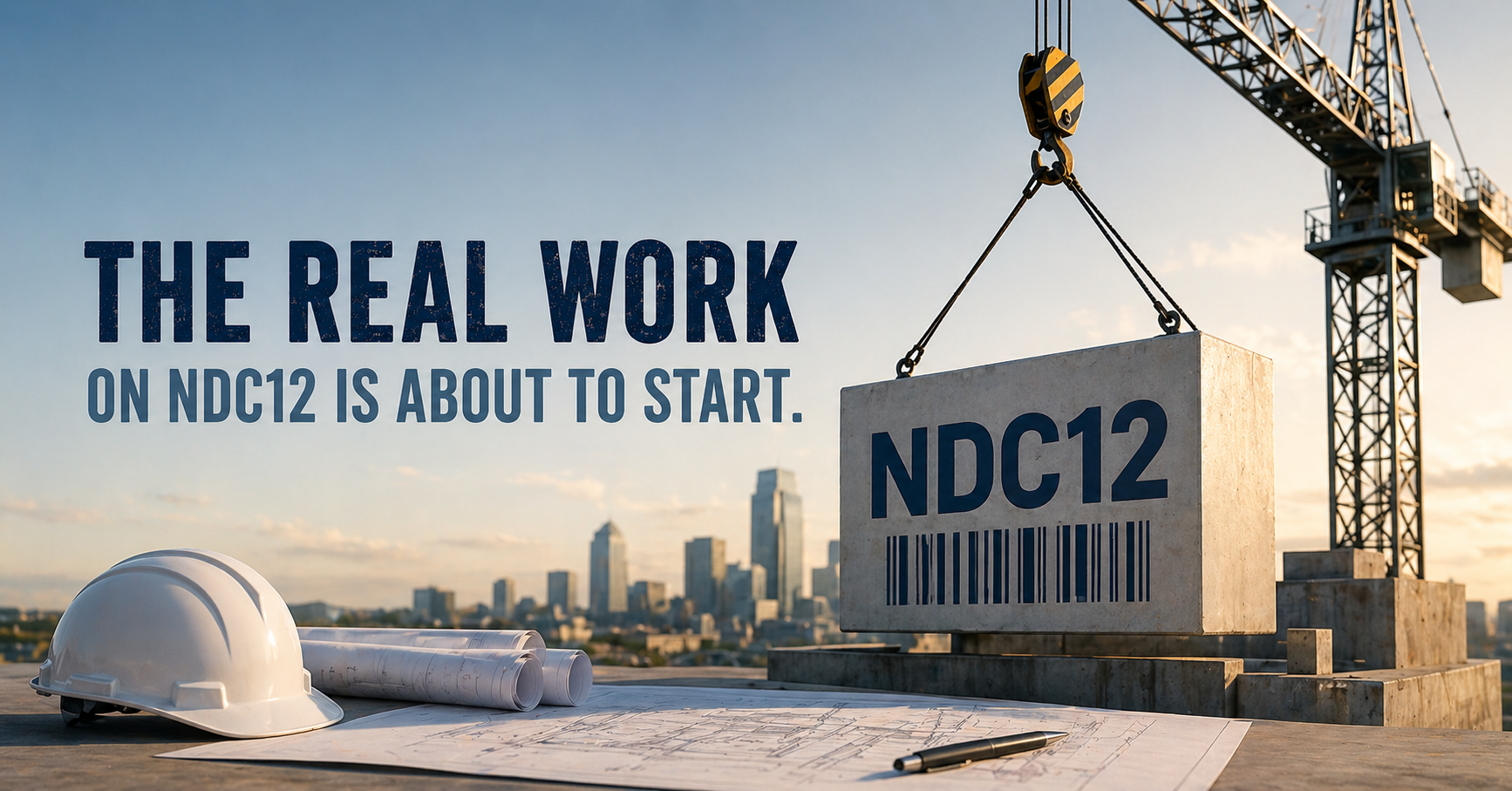
The Real Work on NDC12 Is About to Start!
The transition to a 12-digit NDC is entering a new phase. Industry attention is moving beyond the rule itself and toward implementation. As organizations begin to align, areas of friction will start to emerge.
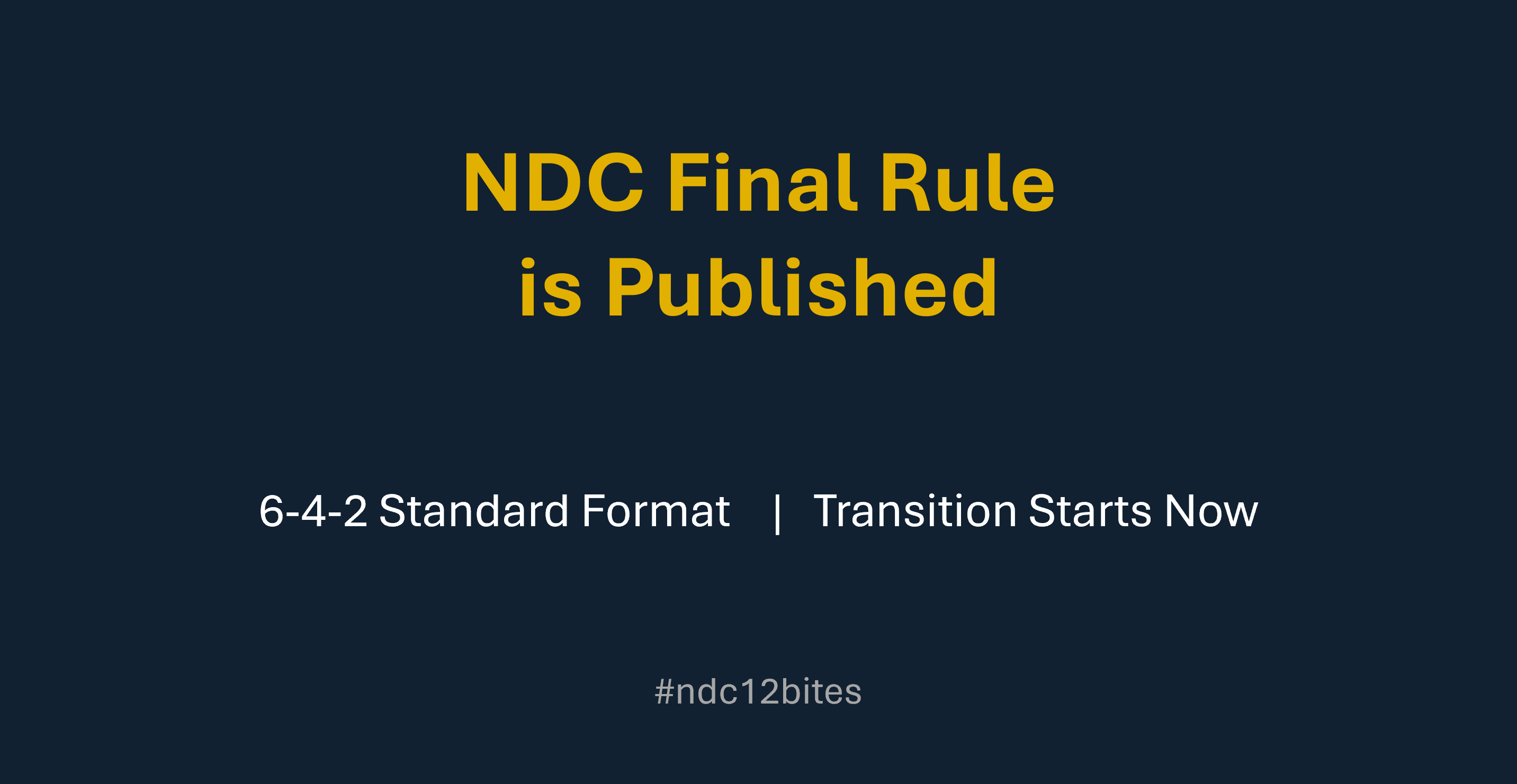
The industry is beginning to move beyond understanding the NDC Final Rule and into the early stages of implementation. That shift is subtle, but important. It marks the point where planning assumptions start to be tested against operational reality.
One of the first structured efforts to work through that transition is being led by Leavitt Partners.
In May, Leavitt Partners will convene an in-person workshop in Washington, DC, bringing together approximately 60 leaders from across government and the healthcare ecosystem. The session is intentionally designed as a working meeting rather than an educational forum. Participation is limited to enable direct engagement across organizations that represent different parts of the system.
This format matters. The complexity of NDC12 does not sit within a single organization. It exists in the dependencies between manufacturers, distributors, pharmacies, payers, providers, and regulators. Working through those dependencies requires coordination, not just interpretation of the rule.
Moving from Interpretation to Execution
To date, most industry discussion has focused on the Final Rule itself. Organizations have been working to understand the structure of the 12-digit format, the rationale behind the change, and the regulatory timeline.
That phase is necessary, but it is not where the primary risk lies.
The more difficult work begins when organizations start to implement changes across systems and processes that were built around the current 10-digit formats. At that point, issues emerge that are not visible when viewed in isolation.
Where Implementation Friction Is Emerging
Early discussions across the industry point to several areas where complexity is likely to concentrate.
System alignment across organizations
NDC is used across a wide range of systems, often with implicit assumptions about format and length. These assumptions are not always consistent across trading partners, creating alignment challenges as the format changes.
Dual-format operations
The transition will require support for both 10-digit and 12-digit NDCs over an extended period. This introduces complexity in data handling, validation, and reconciliation processes.
Testing constraints
Implementation cannot be validated within a single organization. End-to-end testing will require coordination across multiple stakeholders, with dependencies on timing, environments, and data consistency.
Persistence of legacy products
Products with 10-digit NDCs will remain in circulation longer than many planning models assume. This extends the duration of mixed-format operations and increases operational burden.
These issues are interconnected. Progress in one area is often dependent on readiness in another, reinforcing the need for cross-sector coordination.
The Role of Industry Coordination
Leavitt Partners has experience facilitating this type of alignment. The firm has been the driving force behind the Partnership for DSCSA Governance (PDG), which has become a central coordination body supporting DSCSA implementation.
The NDC12 transition presents a similar coordination challenge. While the regulatory requirement is clear, the path to implementation requires alignment across organizations with different systems, priorities, and timelines.
Efforts such as this workshop are an early step toward building that alignment.
Extending Access to Early Insights
Participation in the workshop is limited. To provide broader visibility into the discussions, Leavitt Partners plans to share early takeaways through a public webinar.
Additional information and registration details are available here:
https://hma.connect.space/ndc-final-rule
Further context on the workshop and its objectives has also been shared by Leavitt Partners:
https://www.linkedin.com/feed/update/urn:li:activity:7455632693683359744/
The NDC Final Rule establishes the direction of change. The work now is in understanding how that change will be implemented across interconnected systems and organizations.
This is the stage where assumptions are tested. It is also where the true complexity of the transition begins to surface.